Laser Systems
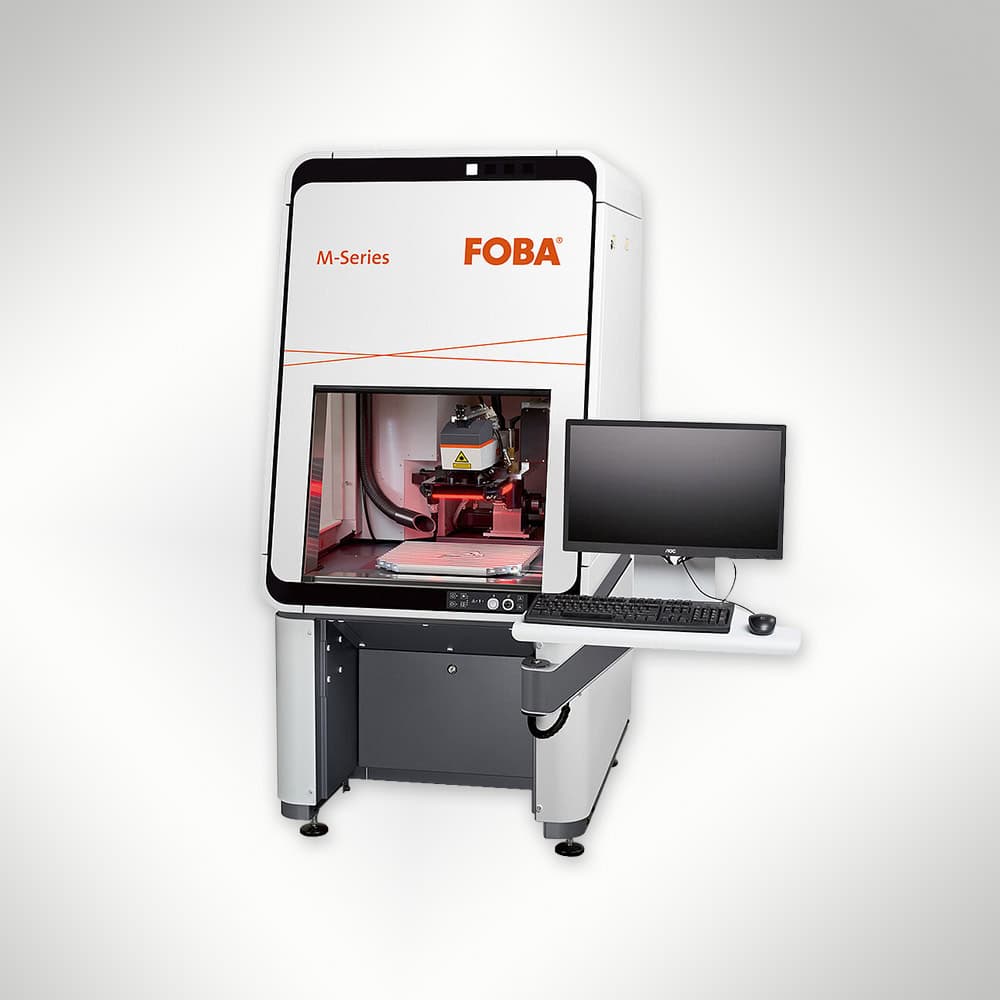
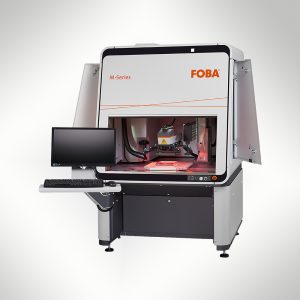
FOBA M2000
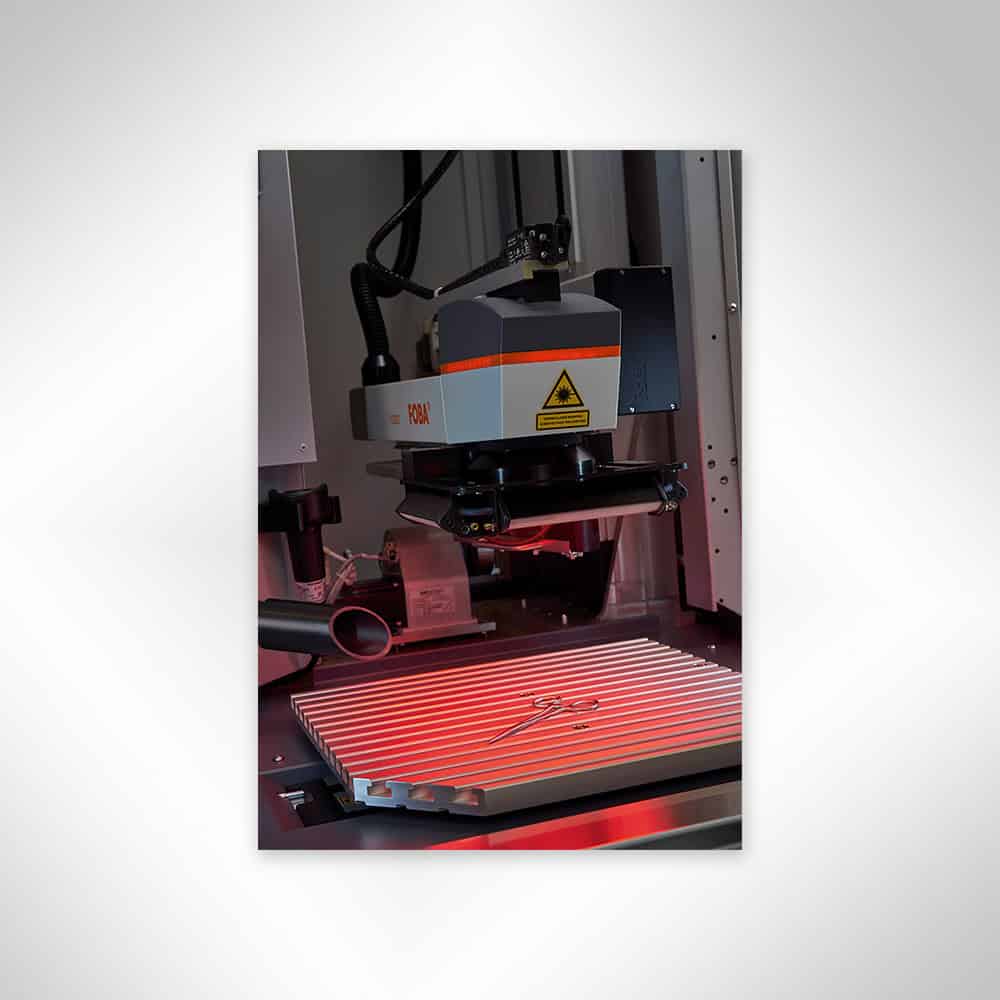
The FOBA M2000 is a versatile laser marking workstation designed for high-precision marking of small to large components. Available in three configurations, it features advanced automation options, vision inspection, and compatibility with fibre, UV, and green laser technologies for superior traceability and product marking.
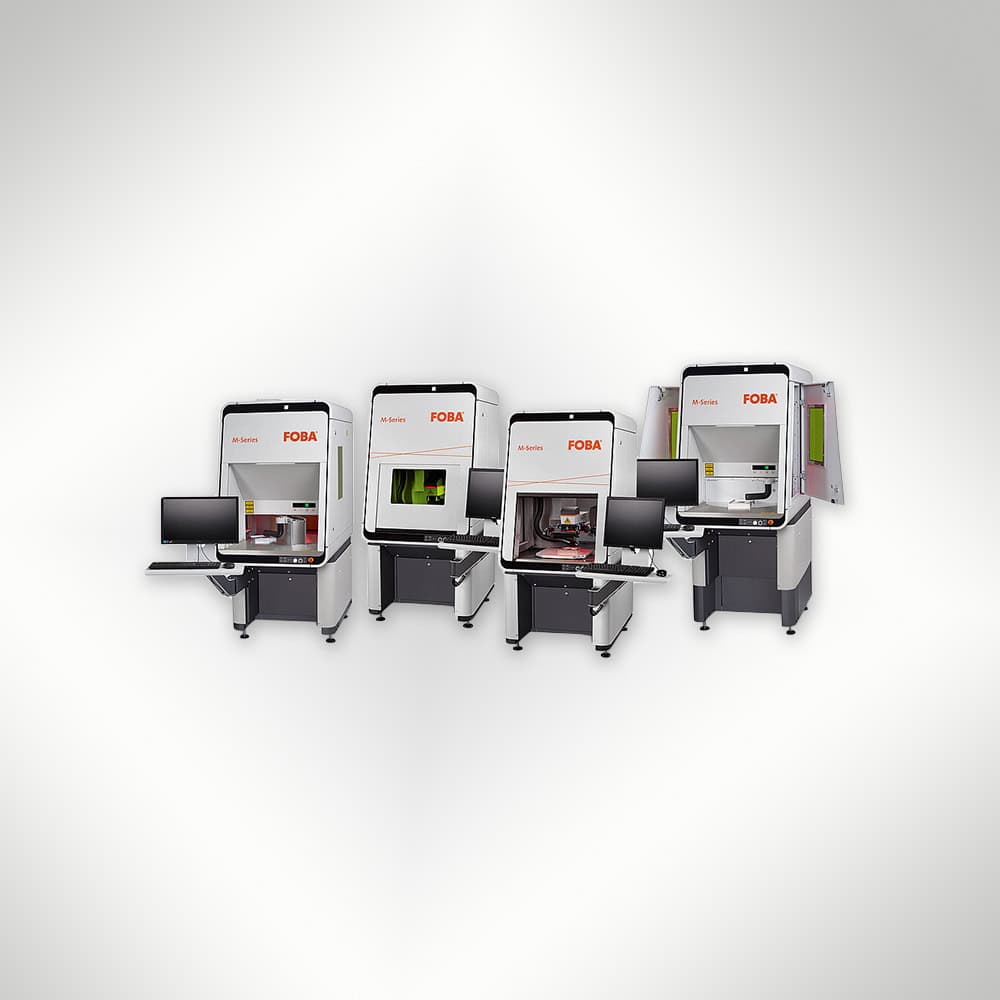
Models
The M2000-B is equipped with a worktable, a programmable Z-axis, and an electric lift door. It is ideal for standard part marking applications, providing reliable results for industries requiring traceability and compliance.
The M2000-P features programmable X, Y, and Z axes, making it suitable for batch marking and complex marking tasks on trays or large parts. Its advanced automation capabilities improve throughput and marking consistency.
Laser Type
The M2000 is compatible with FOBA’s Y Series IR fibre lasers, ranging from 20 Watt to 50 Watt, offering precise, high-contrast marking on metals and some plastics. Fibre lasers offer deep black, corrosion-resistant marks, making it suitable for medical devices and sensitive materials. The consistency of the beam output and being easily maintained makes them well suited to a range of versatile manufacturing and production applications.
FOBA’s 4 Watt UV laser, part of their V Series range, is ideal for delicate materials, providing fine, high-contrast markings with minimal heat impact. This makes it perfect for medical devices, plastics, and sensitive electronic components.
FOBA’s 10 Watt Green laser, part of their V Series range, delivers sharp, high-contrast markings on a range of materials, including metals and plastics. Its low thermal impact ensures precise results for components in aerospace, medical, and automotive industries.

Laser Systems
Laser Marking & Engraving
The FOBA M2000 laser marking workstation offers precision, flexibility, and productivity for a range of industrial marking applications. Available in two models (B, P), it caters to different production needs, from standard part marking to batch processing and rotary marking. Designed with a robust polymer concrete structure, it ensures vibration-free operation for consistently high marking quality. The M2000 is compatible with fibre, UV, and green lasers, providing permanent, high-contrast results on materials such as metals and plastics. Advanced features include a programmable Z-axis, optional multi-axis configurations, and integrated vision inspection for error-free marking and reduced waste. Its ergonomic design, electric lift door, and optional rotary table make it ideal for industries such as automotive, medical, and aerospace, where precision and compliance are critical.
Send a Product Request
Product Form
Contact form for product pages
"*" indicates required fields
Laser Marking & Engraving
Related Laser Systems
Answering Your Questions
Frequently Asked Questions
Laser marking is commonly used for applications requiring high precision and contrast without material removal, such as marking serial numbers, barcodes, and logos on electronic components, medical devices, and automotive parts. Laser engraving is often used when a durable, deep mark is needed, such as on jewelry, awards, and industrial components. Engraving provides a permanent mark that can withstand harsh environmental conditions.
Both laser marking and engraving can be applied to a wide range of materials. Common materials include metals (such as stainless steel, aluminium, and brass), plastics, ceramics, and certain coated materials. The suitability of a material depends on its properties and the desired outcome of the marking or engraving process.
Laser marking involves using a laser beam to alter the surface properties of a material, creating marks such as logos, serial numbers, or barcodes without removing material. This process can produce colour changes, oxidation, or other surface alterations. In contrast, laser engraving removes material to create a cavity in the surface, resulting in a visible, tactile mark. Engraving typically produces deeper marks than marking.
Reviews
Don't Just Take Our Word for It
Our Customers








Talk to Us!
Connect with our Technical & Support Team.